


Let’s talk about two rising tides: analog and wealth.
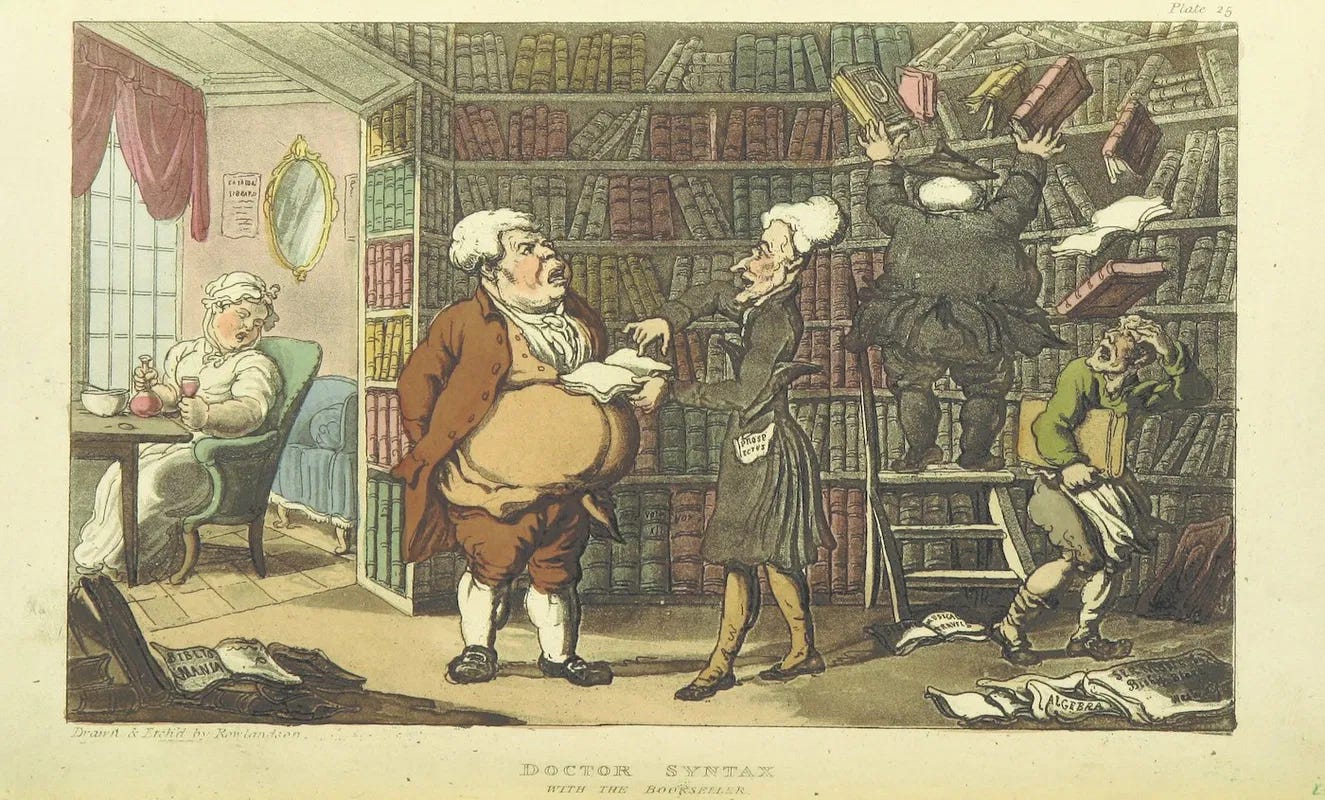
Consider the curious case of rare books. Reading rates are declining, but book ownership is increasing. Tech founders who once collected Patek Philippes are now hunting first-edition novels instead of luxury watches. As we edge closer to a world where all copy will be AI-generated, these books represent something increasingly precious: verified human authorship, irreplaceable scarcity, tangible proof of creativity that can’t be algorithmically replicated.
This hunger for analog authenticity makes perfect sense when you understand what Eugene Healey calls the internet’s “perfectly circular business model.” With 70% of the world’s population carrying mobile phones, we’ve become both the resource and the reward. We give our data, that data designs products tailored to our desires, we buy them, and then—because they reflect our identity—we promote them ourselves, for free, to our networks. The machine runs on our own behavior.
“It’s only natural that it becomes desirable to opt out,” Healey says. And of course, the French were ahead of the curve. As one reader shared in Healey's newsletter chat, being offline has long been a French flex. She says Paris supper clubs have been trending in creative circles for 3-4 years and Boulinier, one of France's largest used bookstores, just celebrated 180 years in business. Older generations view social media as "too American," she declares.
I used to be what you might call a “story monster”—everything I did went on Instagram. But recently, I’ll host entire dinner parties and never mention them online. At first, I thought this was just a symptom of getting older, but perhaps it’s actually the subconscious flexing of my privilege to privacy. The privilege of unmonetized presence.
The rich as entertainment
As the rich exercise their right to digital privacy, our cultural obsession with wealth has never been more explicit. Media companies are doubling down on covering the rich as entertainment. Caper, a new food media company started by Puck alumni, launched with the mission of “covering the people, money, power, creativity, and chaos that fuels the food world.” Rich People Shit by Carson Griffith, which launched on Substack only recently, is already the #27 New bestseller. The Wall Street Journal is currently hiring a “Power & Culture reporter.” The job listing is worth a read.
You can’t make this shit up:
“Today’s intersection of power, wealth, culture and style has created scenes for the ages, from $1 billion art-collection feuds to wedding cutlery that has its own security detail. The triumphs and foibles of the rich and privileged—as expressed through social events, summer-colony feuds, strange micro-industries and high-profile squabbles—are the backdrop of this beat, an ideal blend of coverage opportunities for the right self-starting reporter.”
And what the rich do may get more entertaining as time goes on. Just as Silicon Valley changed the face of the rich from old money families and titans of industry to nerdy white guys (65% of billionaires globally are white, and 90% are male), AI will do it again.
The Washington Post reports that the unemployment gap between workers with bachelor’s degrees and those with occupational associate’s degrees flipped in 2025, giving trade workers a slight edge for the first time in 50 years. Stanford research shows a 13% employment drop-off for workers ages 22–25 in the most AI-exposed jobs since 2022, while construction alone needs 349,000 net new workers this year.
Young people are responding. Community college enrollment rose 3% last fall, more than double the growth at public four-year schools, while private four-year enrollment declined over 1.5%.
“They’re seeing more and more college grads working as baristas,” said ABC chief economist Anirban Basu, and “many are quite savvy in recognizing that AI doesn’t threaten the blue-collar workforce the way it threatens the livelihoods of the white-collar workforce.”
Perhaps tomorrow’s Mark Zuckerberg will own a construction company.
Offline as status symbol
This year, the ultimate luxury isn’t having the latest technology—it’s having enough security to refuse optimization entirely. That means using your own personal network to get business advice or a new restaurant instead of Instagram, Google, or ChatGPT; getting invited to parties and gatherings that aren’t posted online; having enough wealth that you don’t need to post things to build your personal brand or advance your career.
Speaking of refusing to be optimized: Anthropic just dropped an ad basically calling ChatGPT predatory now that ads are coming to the platform. Their pitch? We won't use your data to sell you stuff. It's a smart play—positioning privacy as their differentiator while ChatGPT becomes yet another channel for businesses to extract value from your attention and data.
When we think of analog for the masses, it’s doing crafts or an offline activity like reading a book. And yet, the average person will inevitably share a picture or video of them doing said offline activity — feeding the algorithm, letting the powers that be know exactly what they’re doing and what they like and what they might buy.
When you apply analog to those with capital and access to cultural centers, it means the option to truly opt out of sharing thoughts and preferences with Meta/Google/Amazon and the public. In a world designed to extract value from every moment of our attention, the greatest privilege is simply logging off.
For brands watching this shift, the lesson is clear: the same principles that make rare books valuable—scarcity, provenance, craft, human authorship—now apply to all marketing in an age of infinite content.
This deep dive was featured in my newsletter - subscribe for your weekly dose of cultural intelligence.


Rumor has it that Substack is suppressing free content. If you’d like to resist the algorithm pushing paid content only, then liking, sharing, quoting and restacking this newsletter will help! <3