



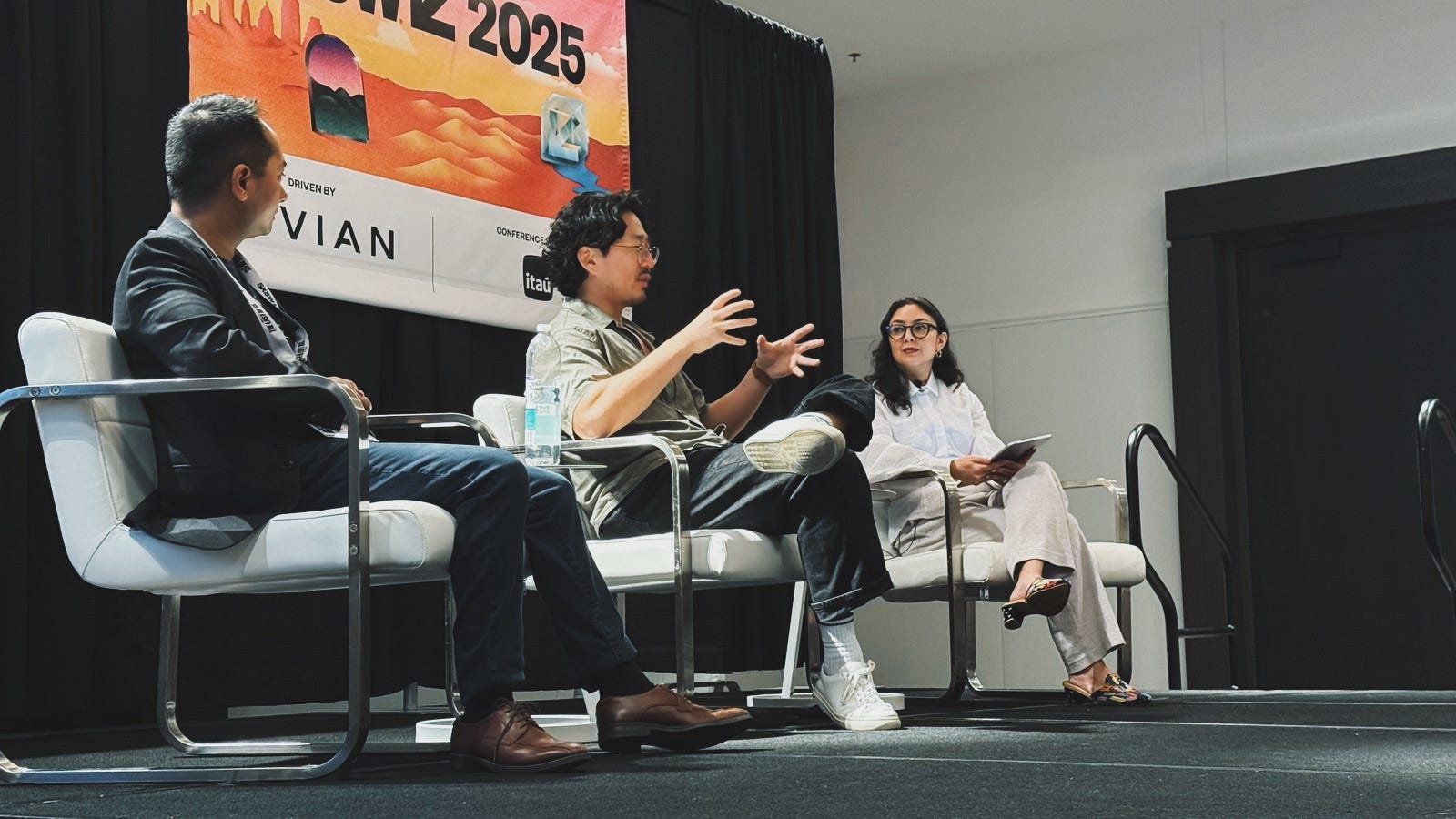
On March 8th Dan Burgar, CEO of Frontier Collective, Mark Masongsong, CEO of UrbanLogic, and I sat down at South by Southwest to discuss "The Future of Innovation Spaces for Humanity & Connection." Friends on LinkedIn were asking if the session would be recorded and huzzah, it was! You can listen to the recording on the official SXSW website or on this page. I love listening to the SXSW sessions I missed in person while I do dishes and chores around the house!
As promised, and if you don't want to listen to it in full, here are some skimmable bullets of the conversation.
Key Takeaways:
✅ Space matters – Innovation isn’t just about shared office space. The physical design of a workspace and the careful curation of people and companies are essential to foster groundbreaking ideas.
✅ Serendipity is by design – Meaningful connections don’t just happen—they require thoughtful planning and execution. When done right, they create economic value on their own.
✅ AI and loneliness will shape our future – As AI automates processes and commoditizes expertise, creativity becomes more valuable than ever. The best ideas emerge when people come together in intentional environments.
An Innovation Hub is not a co-working space!
Innovation Hubs are built for co-working, but the companies and people in an innovation hub are carefully curated and share a mission or some overlap on what they are working on.
Innovation Hubs are not focused on making money from selling space. Fees for office space go back into community programming and ecosystem building.
Why Do Innovation Hubs Need to Exist?
Nearly 50% of the technologies we need to decarbonize are not commercially available yet. Innovation Hubs help increase commercialization rates and bring the tech we need now to market faster.
This is especially critical because there is a high failure rate: Around 60% of companies that secure pre-Series A funding fail to progress to Series A, with only 30-40% succeeding.
Community as a Key Factor: A 2023 survey found that 64% of Series A founders attributed their success to having a strong community.
Community provides both support and healthy competition.
The Decline of Community and Social Connection
Two major forces are contributing to the decline of community:
The Rise of AI and Technological Acceleration
Future waves of AI will come more rapidly than technologies in the past, making AI adoption essential for staying competitive.
Consumer habits are shifting; conversational AI will soon replace traditional search, making current methods (ie. Google) feel outdated.
AI advancements may lead to a sense of dehumanization and individualism, forcing society to redefine the value of being human.
The Loneliness Epidemic
Impact of COVID-19: The pandemic accelerated the decline of “third spaces” (cafés, coworking spaces, etc.), reducing organic social interactions.
Shrinking Social Networks: Dr. Marissa King’s research found that, during the pandemic, people’s social circles shrank by 16%, especially among men.
Emergence of Loneliness Apps: Startups like Pie ($11.5M Series A) and 222 ($2.5M seed) are emerging to address loneliness and getting legitimate venture capital dollars.
Health Consequences: Studies show low social connection is worse for health than smoking, obesity, or high blood pressure. Strong relationships are better predictors of happiness than wealth or IQ.
Trend forecasters say the coolest person in your friend group is the one who throws dinner parties. So throw those dinner parties and reap the health benefits!
What Makes a Good Innovation Space?
The Role of Beauty in Productivity: Research shows that aesthetically pleasing environments (parks, sculptures, green spaces) improve well-being, increase social interaction, and enhance creativity.
The Journal of Environmental Psychology (2008) found that exposure to nature and beautiful spaces boosts cognitive function, work performance, and overall happiness.
How does this translate into a building? Open concepts, where your cafe is located, and the creation of meaningful labs and shops. Also plants.
Why WeWork Just Isn't It
WeWork represents a “rise and grind” culture that feels out of touch in today’s world.
Revenue-First Model: Focuses on office rentals rather than fostering an intentional community.
Lack of Identity: WeWork lacks a sense of history and place, which can make a space feel uninspiring.
Final Thoughts
As AI and digital transformation accelerate, human-centered spaces will become even more valuable. The challenge—and opportunity—is to design environments that prioritize community, creativity, and a true sense of belonging. We think we'll see more interest in creating Innovation Hubs across the world to build intentional communities that help get critical technologies over the finish line.
See you next year SXSW!

