


Today’s letter includes: why Aldi has a more devoted fanbase than Apple, the woman charging serious money to teach sorority rush strategy, how a typo-filled billboard drove 6M impressions, whether we can make meat lovers go vegetarian, and why 1 in 10 Americans are beta-testing the future of human desire.
Last week I shared my easy summer dinner party recipes. Now I'll share my secret weapon — I get my burrata from Aldi. It's extremely affordable (under $7 for two balls of cheese) and tastes just like the $20 version you get at a restaurant. Drizzle that bad boy with some truffle oil or any good quality EVOO and some fancy flaky salt and boom — welcome to Trattoria [Insert your name here]!
"But there's no Aldi near me," you might say. Same. That's what Instacart is for ($10 off in that link if you’re Instacart curious). Even with the fees, Aldi is so affordable that it ends up being cheaper than going to a local NYC grocery store. It's true that some things are hit or miss, but the "Specially Selected" line is chef's kiss.
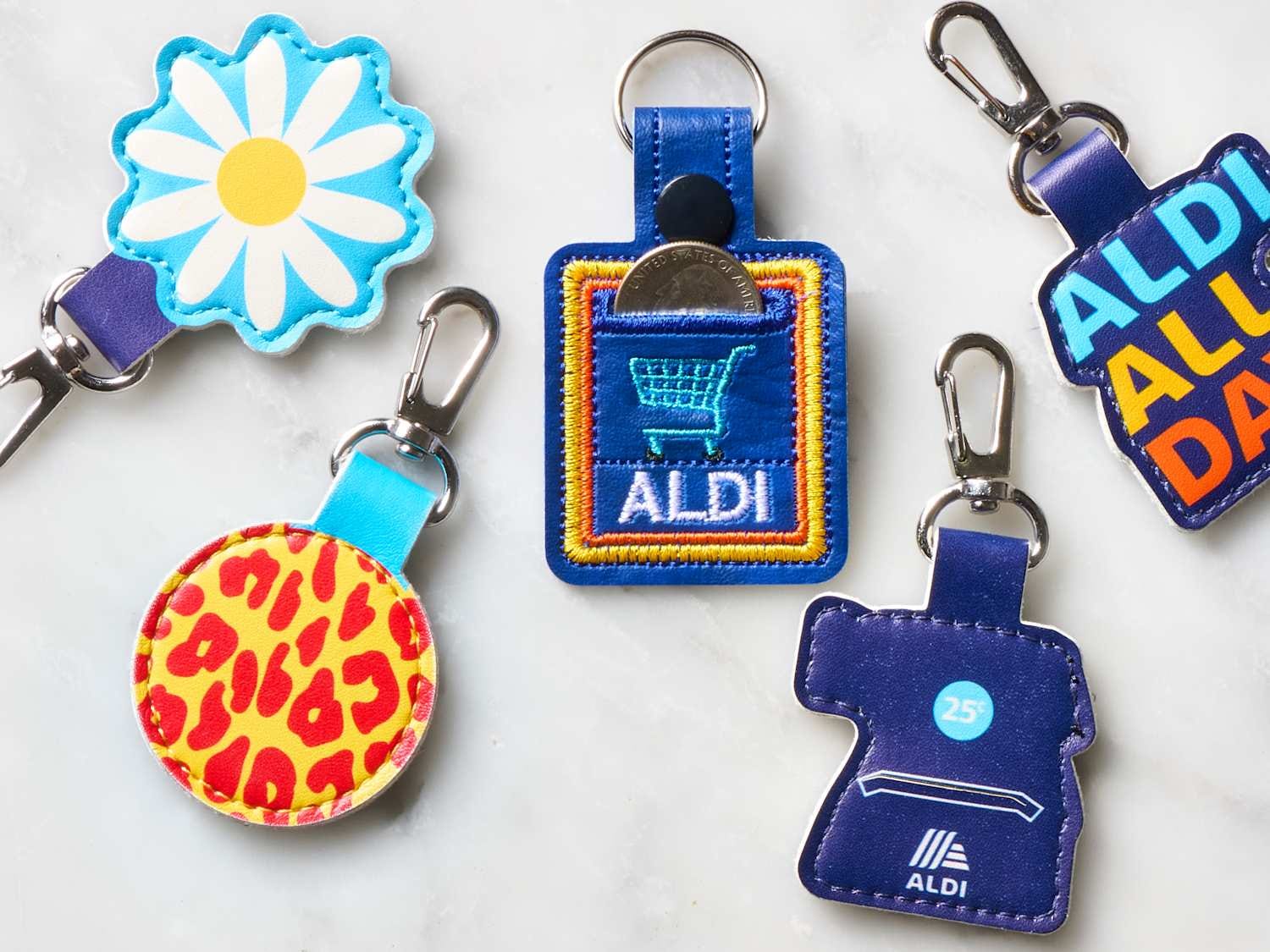
I never thought I'd be writing about a grocery store that forces you to insert a quarter just to get a shopping cart, but here we are, thanks to the one and only Rosa Barney. She is an Aldi evangelist and an insanely good home cook.
When she first told me that Aldi was the way, I was skeptical—how could it be so cheap and have great quality at the same time? How did this random discount grocery store create the most devoted customer base since Apple?
Private Labels
Well, it's a tale as old as time—at least if you read this newsletter. About 90% of what Aldi sells are its own, private-label brands (are you sensing a market theme?). They've basically eliminated the middleman markup that comes with national brands, which means their spaghetti sauce tastes just as good as Rao's but costs about 40% less.
Adult Treasure Hunt
The second factor is the “treasure hunt” experience. Unlike the predictable shelves of most supermarkets, Aldi’s product offerings constantly evolve. 3.8 million people try to stay on top of it by joining the Facebook group Aldi Aisle of Shame Community, named for the store's middle aisle that features odd weekly finds like pool lounges, academic planners and rice cookers. That's more members than most countries have citizens. And listen, I'm fully in the cult now—I wear an Aldi t-shirt to bed almost every night that you can now only get on eBay. You have to admit it's kinda fire, right?
Ritual
The third and last factor is the ritualistic aspect of shopping there. The aesthetic is... let's call it "industrial chic." You have to bring a quarter for the cart, you bag your own groceries, and goods are placed on large racks in the cardboard boxes they were shipped in. It sounds like a nightmare customer experience, but somehow Aldi loyalists view those inconveniences as features: The quarter for the cart? It's teaching responsibility! Bagging your own groceries? You're in control of how your eggs get handled! Shopping from cardboard boxes? It's authentically no-frills! ***
*** Though my weekly routine involves someone else doing this part for me, Rosa and I physically went there while we were vacationing in Palm Desert where I am proud to say I made my first Aisle of Shame purchase: a 3-piece pizza grilling set that I definitely didn't need but absolutely had to have.
It's working because Aldi figured out that in 2025, convenience isn't about having 47 different types of olive oil to choose from – it's about getting good stuff cheap and getting out quickly. This year, Aldi plans to open 200 stores across the country, more than any other grocer, and expects to have around 2,600 locations by the end of the year, making it the third-largest supermarket chain by number of stores. Talk about German efficiency in action.
The broader trend here is fascinating. Lidl, another German discount chain, just opened in Brooklyn and is aggressively expanding across the East Coast. While Lidl is still playing catch-up to Aldi's success, they're making moves. In 2020, Lidl unveiled plans to add 50 new stores and 2,000 new jobs, though the company has struggled more than Aldi to connect with American consumers and has cycled through five different CEOs in recent years. Still, compared to traditional grocery stores, discount chains like Lidl are winning on pure value.
In a world where everything feels overpriced and under-delivered, places like Aldi, Lidl, Buc-ee's, and Trader Joe's have created a space where people can get quality food without feeling financially violated. Plus, any business model that generates 3.8 million people voluntarily posting about finding discounted kitchen gadgets deserves our respect.
Now if you'll excuse me, I need to go find a quarter.
P.S. LOL to the way this article kicks off with the sentence: "Aldi, the name whispered with reverence by budget-conscious shoppers and met with raised eyebrows by the uninitiated, is a retail enigma." — Pls talk about me like that at my funeral.
Target's getting a new CEO after 11 years of Brian Cornell. Chief Operating Officer Michael Fiddelke is stepping up to tackle what can only be described as a "broad funk" - two straight years of declining revenue, alienated customers complaining about high prices and empty shelves, and shares that dropped 8% on the news.
Rush coaching is apparently a real business now. College senior Grey Battle reports on Trisha Addicks, who charges serious money to train aspiring sorority sisters. The rules? Avoid the six B's: "booze, boys, bucks, brands, bible, ballot." The formula is pure algebra: LoveShackFancy dress + block heels + perfectly calculated "personal flair" = acceptance.
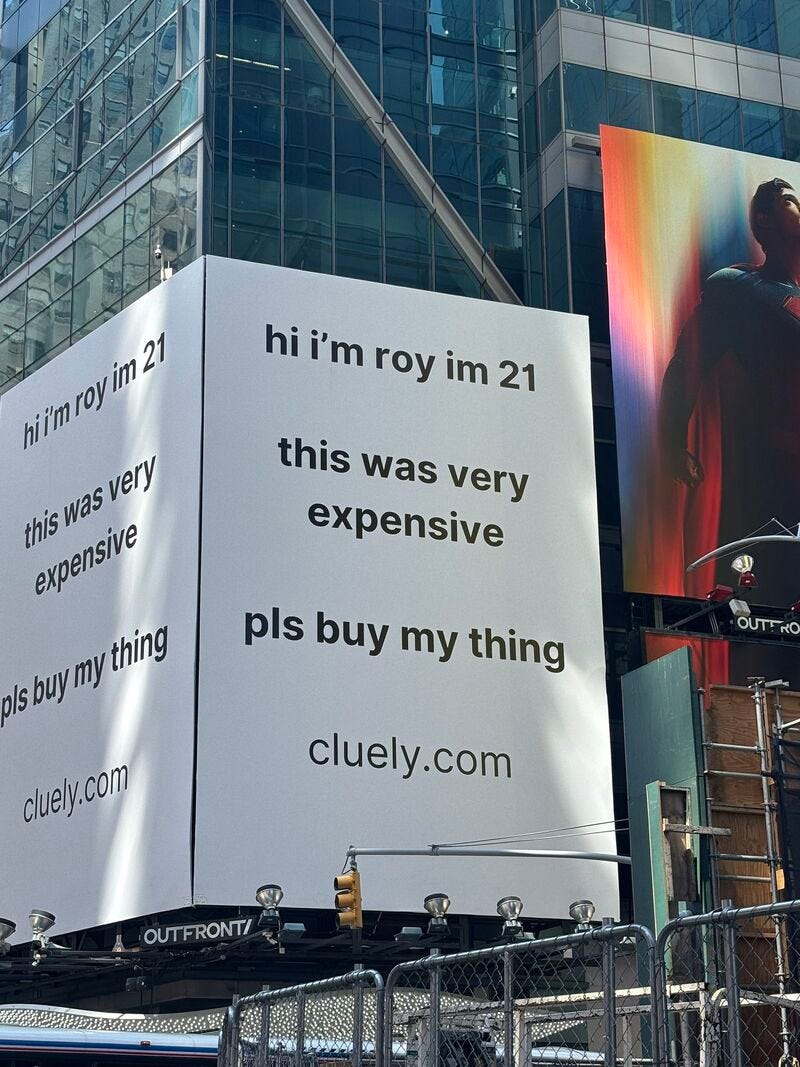
Should you put a typo in your next marketing campaign? A Times Square billboard reading "im 21" with zero design flourish drove 6M+ impressions by weaponizing everything that makes us angry about the internet. The deliberately bad typography, missing apostrophe, and vague flex with no product explanation created the perfect rage-bait storm.
The real genius? Understanding that in 2025, your actual audience isn't the people walking past your billboard—it's everyone snapping a pic of it for their stories.
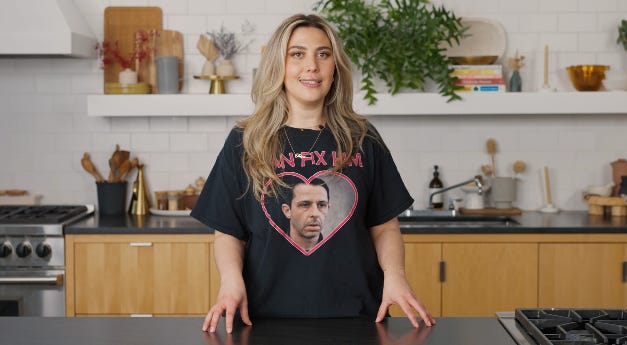
Can you make a “meat and potatoes” guy vegetarian? The Veggie from NYT has launched a new video series to supplement their already successful newsletter. In the first video, they try to convert a “meat loving boyfriend” with 3 mouthwatering vegetarian recipes. It’s cute. Most notable is the host’s excellent t-shirt reading “I can fix him” with a picture of Kendall Roy in a heart.
More than one in 10 Americans are already on Ozempic or its cousins. What started as diabetes medication has become the closest thing we have to a universal fix-it drug. Weight loss? Check. Heart disease prevention? Promising. Dementia protection? Looking likely. Alcohol addiction? Maybe. Shopping addiction? Possibly.
Vox reports that Eli Lilly is rolling out pill versions soon, generics are coming to Canada in 2026, and newer formulations might be even more effective than what's available now. It's starting to sound less like medication and more like a software update for human desire itself.
But here's the existential question nobody's asking: if we can chemically suppress the urge to overeat, what happens to all our other urges? We're essentially beta-testing what it means to modulate desire at scale, and nobody really knows if we can target the "bad" cravings without accidentally dampening the good ones too.
The unlock for an actual AI assistant. APIs first became widely used when SOAP was introduced in 1998. By 2000, Roy Fielding had created the now ubiquitous REST model. REST APIs are how we currently connect apps to each other easily and in a standardized way. Recently, Anthropic released Model Context Protocol (MCP), which is essentially a standardized format to allow LLMs to connect and take action in third party apps. Then ChatGPT (their competitor) shocked the world and adopted it too.
This is a big step in the quest to have actually useful AI agents. These agents can already think, but to take meaningful action we need to give them their hands. I recently worked on a project to announce an MCP offering. I think some of the most powerful aesthetics are created when you juxtapose two opposites - we often did nature vs. technology in my past roles. Here we played with symbols of the past (Renaissance paintings, Vivaldi, retro stopwatches) vs. the technology of the future (agents that can do meaningful, secure work on your behalf).
Don’t forget to give this letter a heart or re-stack if you enjoyed! <3

Thanks for reading! It would mean a lot if you gave this article a heart!