


Today’s letter includes: Why gas station snacks are making people $250K a month, Superman's unexpected side hustle in dog adoptions, what Trump's AI plan really means for tech giants, and the return of CJ Hendry's viral flower market to NYC. Plus more clothing and furniture sales.
You know what's wild? We're living through the golden age of private labels, and most people don't even realize it. Gas stations, warehouse clubs, and of course, Trader Joe’s — they've all figured out that making their own stuff isn't just smart business, it's incredible business.
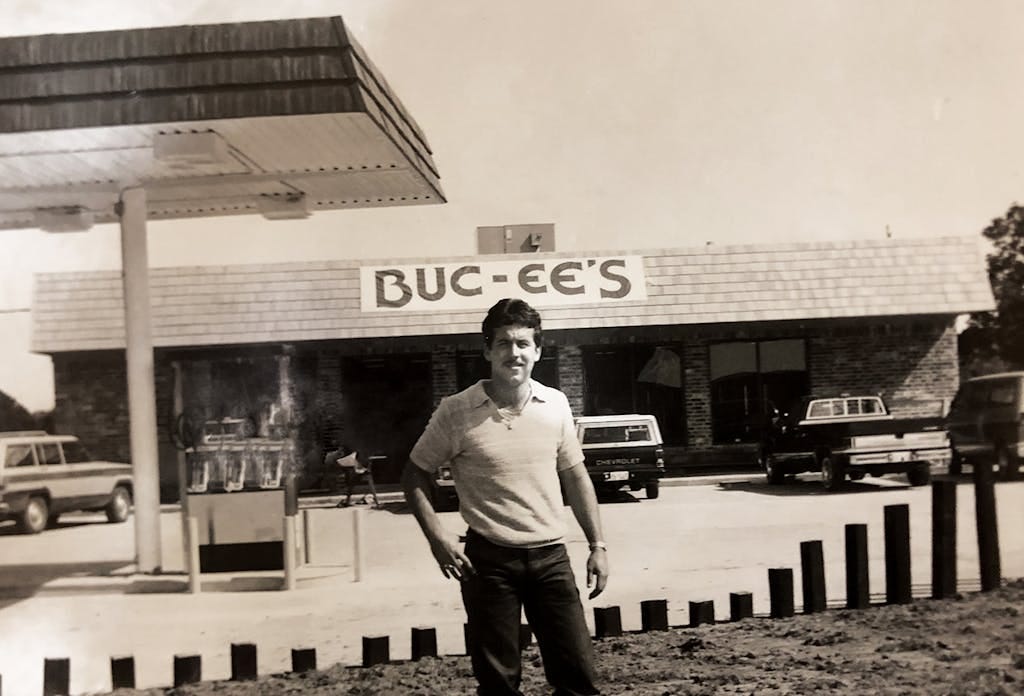
Surely you've heard about Buc-ee's by now. It was founded in 1982 in Clute, Texas by a man with the most Texas of names - Arch "Beaver" Aplin III. His grandparents, Arch (the first, presumably) and Mae Aplin, owned and ran a general mercantile and gas station called "the Biggest Little Store." You can't make this stuff up.
If you've never been to a Buc-ee's, imagine if Walmart and Disney World had a baby, but the baby was obsessed with brisket and clean bathrooms. These places are massive — we're talking 35,000 square feet with 120 gas pumps. The Luling location is literally the world's largest convenience store at 75,593 square feet.
Though Texans may roll their eyes because they've been to many Buc-ee's, don't feel bad if you're an East Coast Wawa loyalist who has not. Lucky for you, I have a first-hand account from my Dad, who said his Florida community has been ablaze with chatter after the chain's expansion into the Sunshine State.
"The bathrooms are so numerous and clean!" he gushed. "And tons of gas pumps, 100 of them."
Dad loved the private label beef jerky. He said it's really something. And he had a beef brisket sandwich which he proclaimed was "better than Arby's." Plus, it wasn't expensive, and it felt more like a Walmart than a convenience store. It was "mega."
Though I was getting the sense that my dad was definitely a fan, he knew a line had to be drawn. "Now I see these people down here wearing Buc-ee's shirts and hats — I'm not doing that!" It stops at merch for John and we respect that.
So back to the beef jerky of it all: Buc-ee's signature lemon crisps, beef jerky, BBQ sauce, and "Beaver Nuggets" are so popular that resellers are making $250,000+ per month hawking them to people who can't get to a Buc-ee's location. Let me repeat that: a quarter of a million dollars per month selling gas station snacks online. One entrepreneur, Chris Koerner, started TexasSnax.com after realizing Buc-ee's didn't have an online store, and now he's moving over 1,000 different Buc-ee's products with markups ranging from 50% to 132%.
And customers are happy to pay it! Beaver Nuggets that cost around $5 in-store are selling for $14.89 online — a 199% markup — and people are buying them by the truckload. There are Facebook groups dedicated to Buc-ee's products with hundreds of thousands of members, mostly elderly women, posting what they want and having it fulfilled by personal shoppers who've turned Buc-ee's runs into side hustles.
But Texas gas stations aren't the only ones who've figured this out. The absolute king of private label is sitting right there in your neighborhood warehouse club. Costco's Kirkland Signature brand hit $86 billion in revenue in 2024. To put that in perspective, that's more than all the revenue earned by consumer products giant Procter & Gamble in 2024. Kirkland accounts for nearly one-third of Costco's total sales and outpaces the growth of Costco's overall sales.
Think about that for a second. A store brand that didn't exist until 1995 is now bigger than Coca-Cola, Nike, and Hershey. Kirkland is America's biggest consumer packaged goods brand measured by sales. They're selling everything from batteries to cashmere sweaters to 24-year-old Scotch whisky under the same brand name, and somehow it works.
The secret sauce? Costco underprices national brands by about 20%, matches or exceeds their quality, and keeps their markup to just 15% over cost. Meanwhile, 90% of Costco's sales come from members who are literally paying for the privilege to shop there, creating this incredible loyalty loop where people feel invested in finding value.
And here's what's really genius about both Buc-ee's and Costco: they're not trying to be everything to everyone. "Inside sales" account for two-thirds of Buc-ee's revenue — people aren't just stopping for gas, they're spending serious money on beef jerky and beaver-themed merchandise. Each Buc-ee's location averages $1.5 million in daily revenue, which is absolutely insane for a convenience store.
The thing is, this isn't just about saving money anymore. These brands have figured out that private label can be aspirational. You're not buying generic cereal in a sad white box — you're buying into a whole experience, a membership, a community. The average person spends three minutes and 33 seconds in a convenience store, but people spend significantly longer at Buc-ee's because "you want to spend time in there, and you want to spend money in there."
Both companies have created something that goes way beyond just "cheaper than the name brand." They've created cult followings. They've turned private label from a cost-cutting measure into a reason to visit. And the numbers don't lie — Buc-ee's revenue was $2.5 billion in 2022 with a net income of $200 million, while Costco's net sales reached $249.6 billion in fiscal 2024.
So the next time you're deciding between the name brand and the store brand, remember: you're not just choosing between products anymore. You're choosing between entire ecosystems that have spent decades perfecting the art of making you feel good about buying their stuff. And honestly? They're pretty damn good at it.
No press is bad press. Gwyneth Paltrow has been hired by now infamous company, Astronomer, whose former CEO had his affair with the CHRO outed at a Coldplay concert. The video, Thank you for your interest in Astronomer, is a display of smart thinking from the company's marketing team. Of course, Paltrow is Coldplay frontman Chris Martin’s ex-wife and she delivers a perfectly PR-ready performance redirecting the narrative to their software offerings. It is well thought out, well executed, and it’s funny to watch Paltrow say words like “Apache Airflow” and “data workflow automation.” It makes you wonder if they were able to execute so fast because there was no CEO and CHRO to get approval from.😛
Krypto effect drives real dog adoptions. Krypto, the CGI super-pup from James Gunn's new Superman movie, is apparently more powerful than we thought. After the film raked in $217 million globally during its premiere weekend, Google searches for "adopt a dog near me" shot up 513%. Searches for "rescue dog adoption near me" jumped 163%, and "adopt a puppy" climbed 31%. Plot twist: searches for "adopt a schnauzer" specifically rose 299%, suggesting people want their own version of the fictional flying furball. Warner Bros. Discovery leaned into the moment by covering adoption fees at Best Friends Animal Society shelters for ten days leading up to the release, resulting in 454 pets finding homes. Who knew the real superpower was making people want to rescue dogs? Sometimes the best marketing campaigns write themselves.
What Trump's AI Action Plan really means. Silicon Valley's bet on Trump has started to pay off. The White House's AI Action Plan blends culture-war politics with industry giveaways and some questionably optimistic techno-futurism. While the headline promises include slashing environmental rules for data centers and contracting only with "non-woke" AI companies, the details reveal three key moves: escalating attacks on the Federal Trade Commission (potentially repealing AI oversight actions from the Biden era), wildly optimistic funding for AI scientific research while simultaneously cutting National Science Foundation budgets for human scientists, and confused messaging on deepfakes—calling for crackdowns just days after Trump shared a fake AI video of Obama being arrested. The plan shows how tech giants' cozy relationship with the administration is paying off, with almost no provisions challenging their power. Great for tech billionaires, bad for society.
Your second chance at last year’s viral CJ Hendry Flower Market. Mark your calendar, CJ Hendry Flower Market 2.0 will be held at Rockefeller Center September 19-21. This is not actually a flower market. CJ Hendry is an Australian artist known for hyper-realistic, large scale renderings of objects. Earlier this year, the conceptual artist brought us the interactive balloon fun house titled “Keff Joons.” Now, she’s giving new life to her previous exhibition, last year’s Flower Market on Randall’s Island. Think thousands of felt sunflowers, roses, daisies, and beyond. Also, Martha Stewart visited.


Art this weekend in NYC: Under The Sun at Friedrichs Pontone (through August 23rd), George Morrison at the Met (through May 2026).
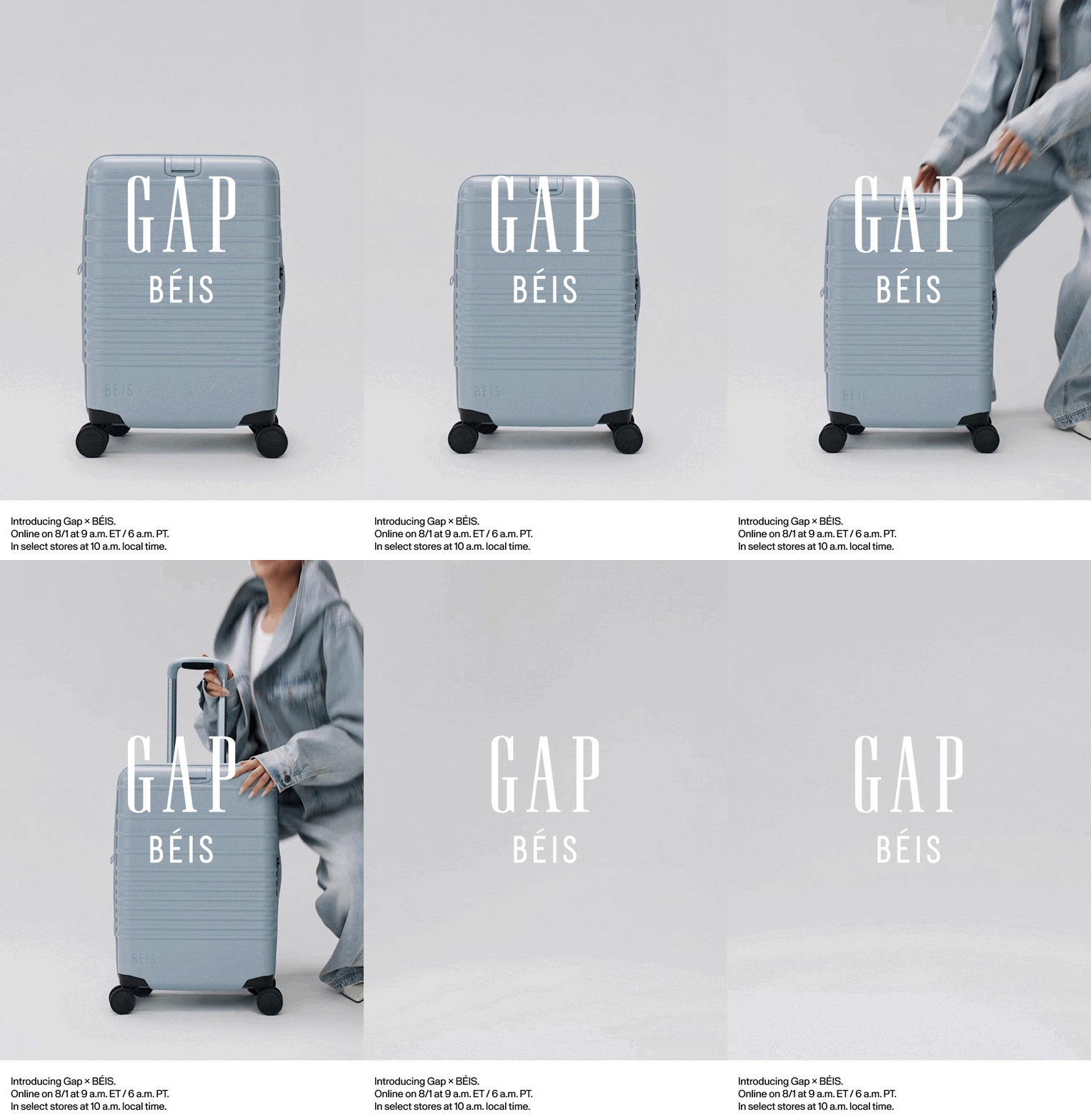
GAP x BÉIS collab hits online stores 8/1 at 9AM ET and in select stores 10AM local time. I have a BEIS suitcase and I like it. IDK if I need it to be in "Gap Denim blue" or whatever they are calling it. More in Vogue.
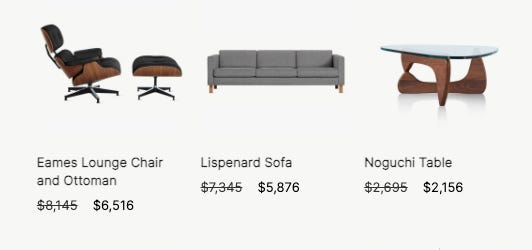
Sale Alert: Aritzia's Summer Sale is now 50-70% off. It could be the perfect time to get that vest shirt that literally everyone on the NYC subway is wearing. Herman Miller is having a "Living Room Sale" with 20% off on many iconic designs including Eames Chairs, the Noguchi Table, and the Nelson Ball Bubble Pendant. Although, the 20% really only takes you from thousands of dollars, to a few fewer dollars TBH. If you did want to spend thousands of dollars, the Eames Lounge Chair and Ottoman going from $8,145 to $6,516 feels significant.
Don’t forget to give this letter a heart or re-stack if you enjoyed! It will motivate me to sit down and write next week :)
Is this chic or is this Eleanor’s house from The Good Place?

Thanks for reading! It would mean a lot if you gave this article a heart!